
This week, Beams had the opportunity to take part in a special broadcast on BFM Business, invited by 3DEXPERIENCE Lab to mark the 10th anniversary of its innovation acceleration program. The event brought together several deep-tech startups supported by the program, highlighting a decade of technological innovation at the intersection of science, industry, and healthcare.
During the interview, Beams shared its vision and approach to one of the most pressing challenges in surgical oncology: ensuring complete tumor resection while preserving healthy tissue.
Despite being the most effective treatment modality for solid tumors, surgery still faces a major limitation. Today, between 20% and 50% of patients experience a local recurrence after surgery, often due to microscopic tumor residues left behind at the margins of resection. These residual cancer cells, invisible to the naked eye, can regrow and lead to relapse.
At Beams, our work focuses on addressing this challenge directly in the operating room. We are developing TRIOP, a miniaturized intraoperative probe designed to help surgeons detect residual tumor tissue in real time. By providing immediate feedback—on the order of seconds—TRIOP allows surgeons to precisely localize cancerous tissue during the procedure and adapt their surgical gesture accordingly.
The technology relies on principles of nuclear physics applied to medicine. A radiotracer, administered prior to surgery, selectively binds to tumor cells and emits particles that can be detected by the probe. This physical signal enables a clear distinction between healthy and tumoral tissue, directly at the surgical site, without interrupting the workflow.
Beyond detection performance, significant attention has been given to ergonomics and surgical integration. TRIOP has been designed in close collaboration with clinicians to meet the constraints of real operating environments, including narrow surgical cavities such as those encountered in gynecological oncology. The current prototype features a compact, tubular form factor—approximately one centimeter in diameter—with a slight bend to allow access to hard-to-reach areas.
Being invited by 3DEXPERIENCE Lab to share this work on BFM Business was an important milestone for Beams. It reflects both the scientific foundations of the project and the relevance of our approach within the broader innovation ecosystem fostered by the program over the past ten years.
This moment also reinforces our conviction: meaningful advances in surgical oncology emerge from close collaboration between researchers, engineers, clinicians, and industrial partners. By combining deep scientific expertise with real-world clinical insight, Beams aims to contribute to a new generation of precision tools that support surgeons and ultimately improve patient outcomes.
Explore the latest advances, clinical insights, and technology shaping the future of intraoperative tumor detection. Stay informed with expert perspectives from Beams and our partners.
Back to news
Beams wins Best Pitch 2026 at the INPI Pitch Contest during VivaTech, organized with WIPO and HEC Paris, recognizing its innovation in surgical oncology.
Read article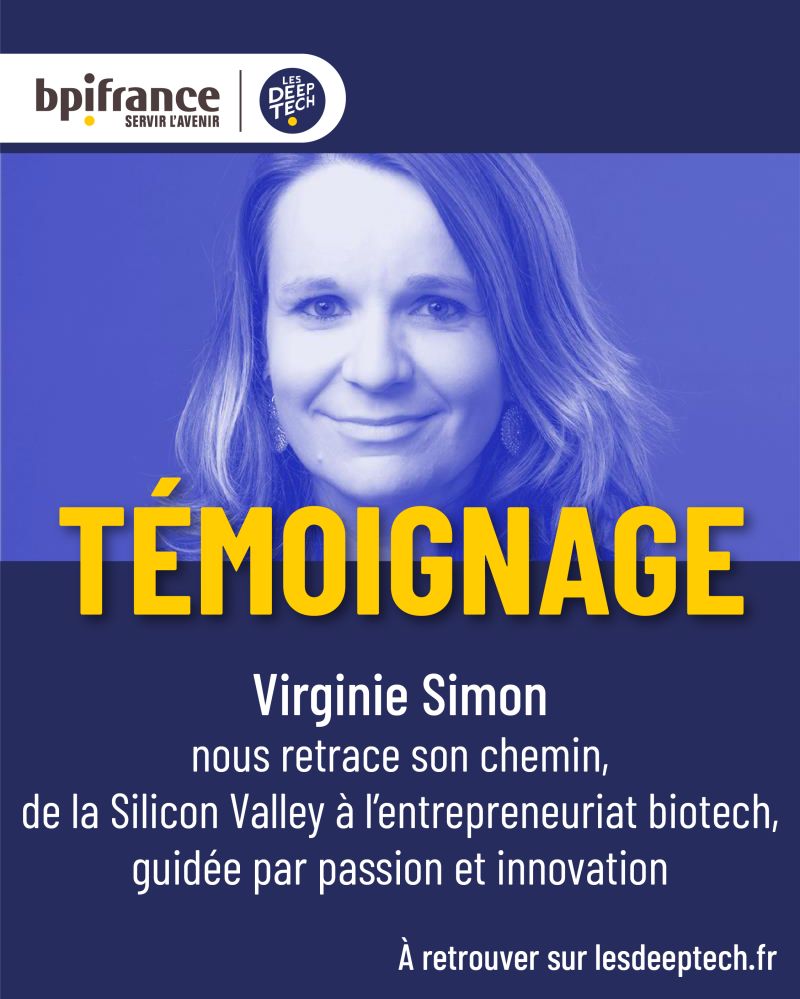
Beams’ co-founder and president, Virginie Simon, was recently profiled by Les Deeptech, an initiative of Bpifrance highlighting deeptech leaders. The feature shares Virginie’s inspiring journey and the vision driving Beams as it develops innovative tools to transform intraoperative cancer care.
Read article
In 2023, CNRS Île-de-France published an article highlighting Beams’ work on developing a new tool to improve the completeness of tumor ablations during surgery. This recognition underscores the strong scientific roots of the project and its contribution to advancing precision in surgical oncology.
Read article
In 2023, Beams was selected as a laureate of the i-Lab Innovation Competition, France’s leading national program supporting deeptech startups. This milestone recognizes the scientific maturity of the project and supports the transition from advanced research to pre-industrial medical technologies.
Read article
In 2023, Beams was selected in the Challenges magazine list of the 100 startups to invest in, a benchmark ranking highlighting the most promising French technology ventures. This recognition underscores the relevance of Beams’ scientific approach and its long-term potential in medical and nuclear technologies.
Read article
In 2023, Challenges magazine published a dedicated article highlighting Beams’ work in developing intelligent technologies to improve cancer treatment. This media coverage reflects the growing recognition of Beams’ approach at the intersection of science, healthcare, and deeptech innovation.
Read article
In 2023, Université Paris-Saclay published an article highlighting Beams’ work in medical technologies serving surgical oncology. This recognition emphasizes the strong scientific foundations of the project and its roots in academic research translated into clinical innovation.
Read article
In 2023, Techniques de l’Ingénieur published an article highlighting Beams’ work on real-time detection of tumor tissues during surgery. This coverage emphasizes the technological and scientific foundations of the solution, as well as its potential impact on surgical oncology.
Read article